The Role of Material
Material is integral to the forms I create: not simply in appearance, but in experience.
Of course it’s partly a question of taste, but it's also much more than that. Each medium carries its own character, weight, reflectivity, texture, permanence, and each alters the experience of the sculpture in subtle but significant ways.
Slate
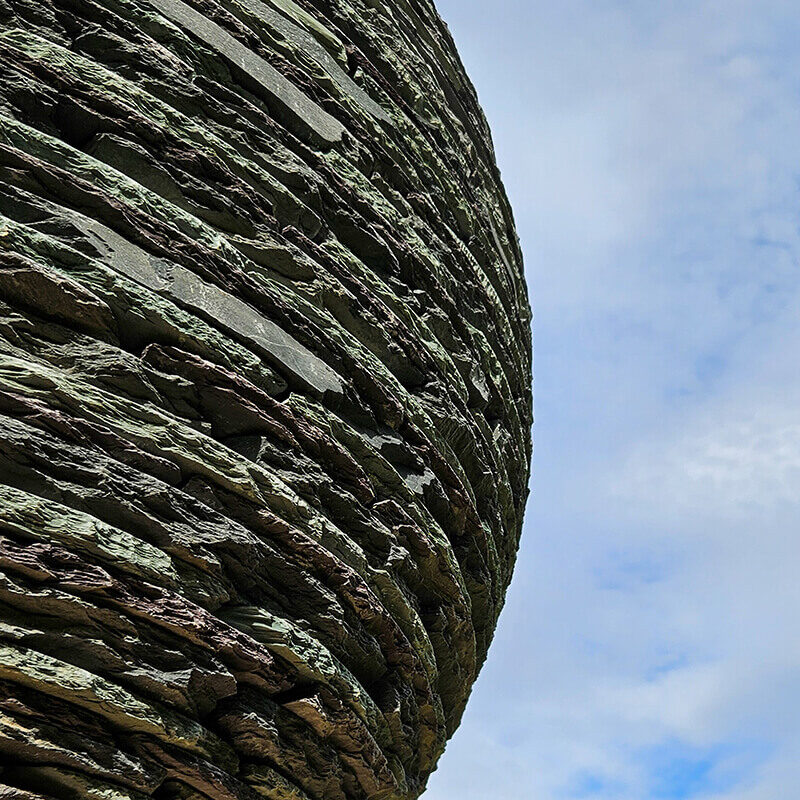
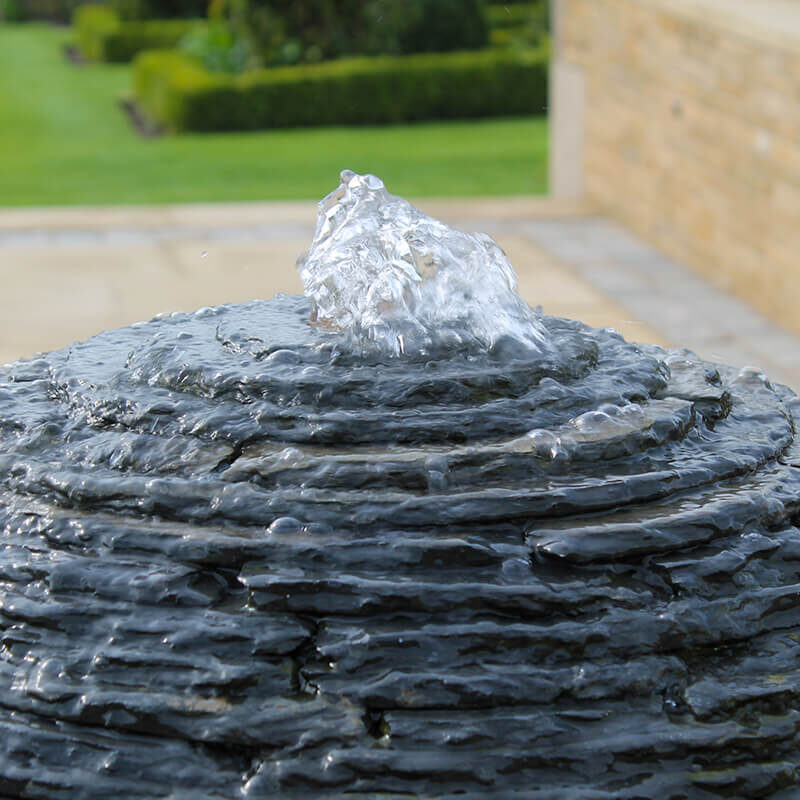
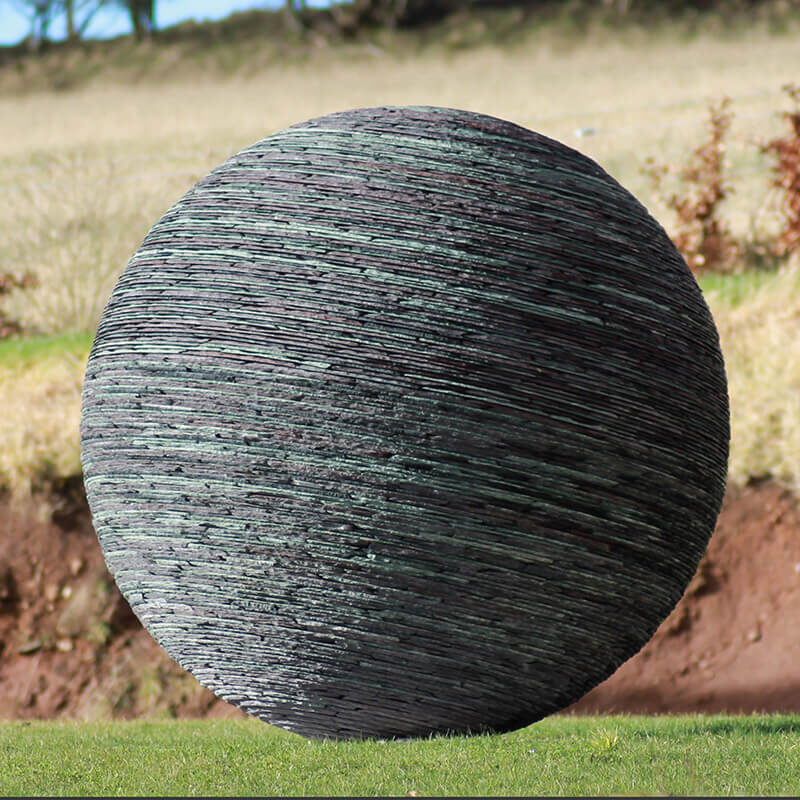
Slate remains central to my work: the first of the materials I chose and the one that continues to shape my thinking. Formed through geological compression, it carries visible layers shaped by time and pressure.
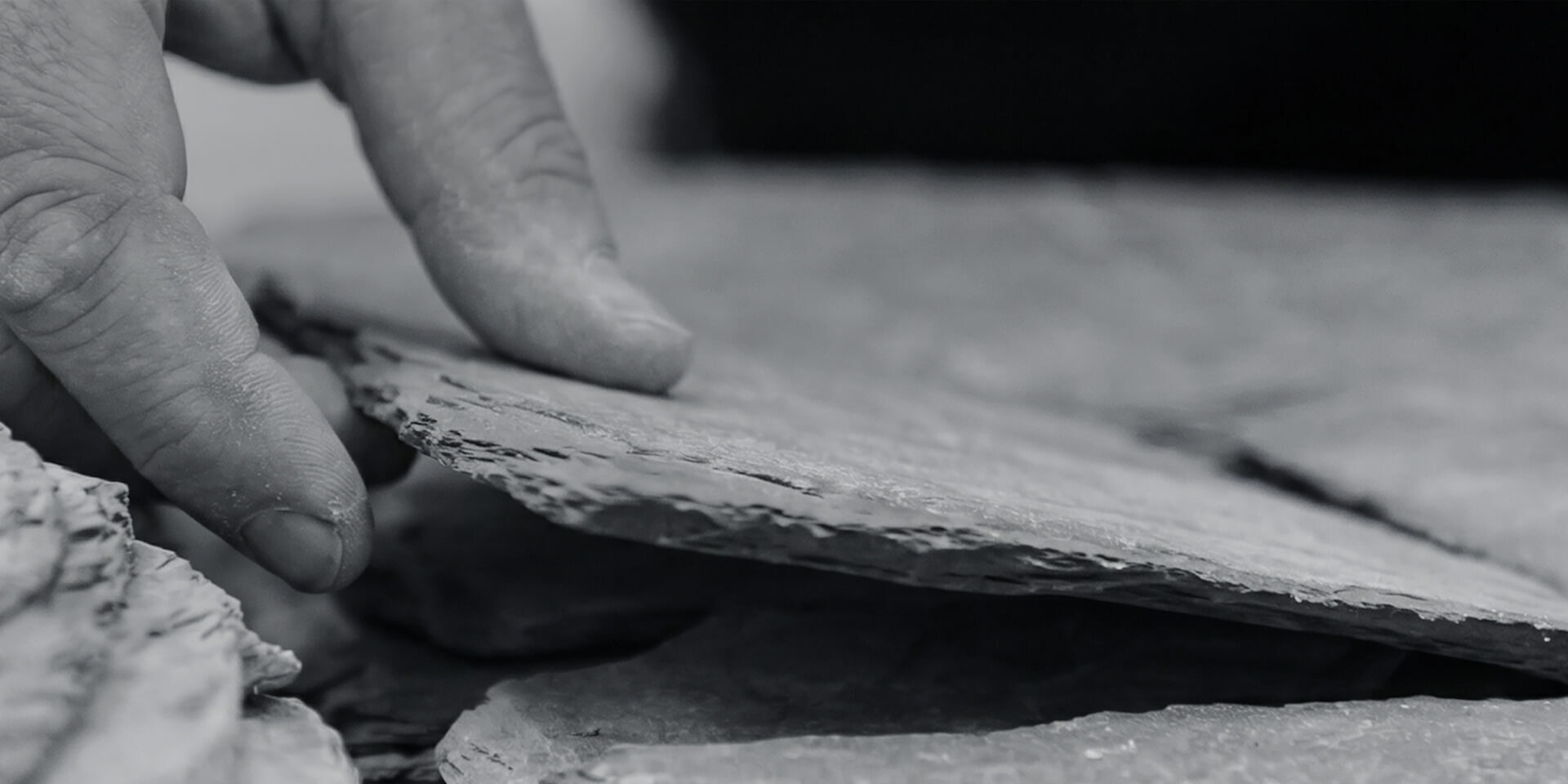
Working with slate is direct and tactile. Each piece is split, shaped and stacked individually.
The layered structure introduces shadow and depth, allowing light to gather between edges. Negative space becomes as important as mass. The construction is a source of intrigue to many.
Where water is incorporated, the surface becomes animated, introducing movement and sound without disturbing the solidity of the form.
Glass
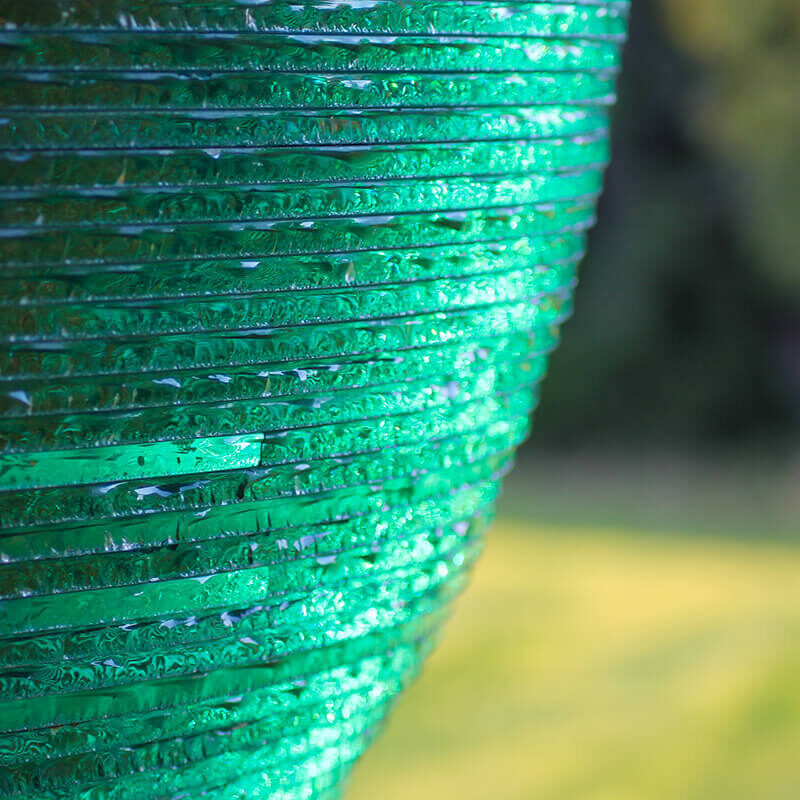
Glass in layers has an ethereal quality shown here in the edge detail.
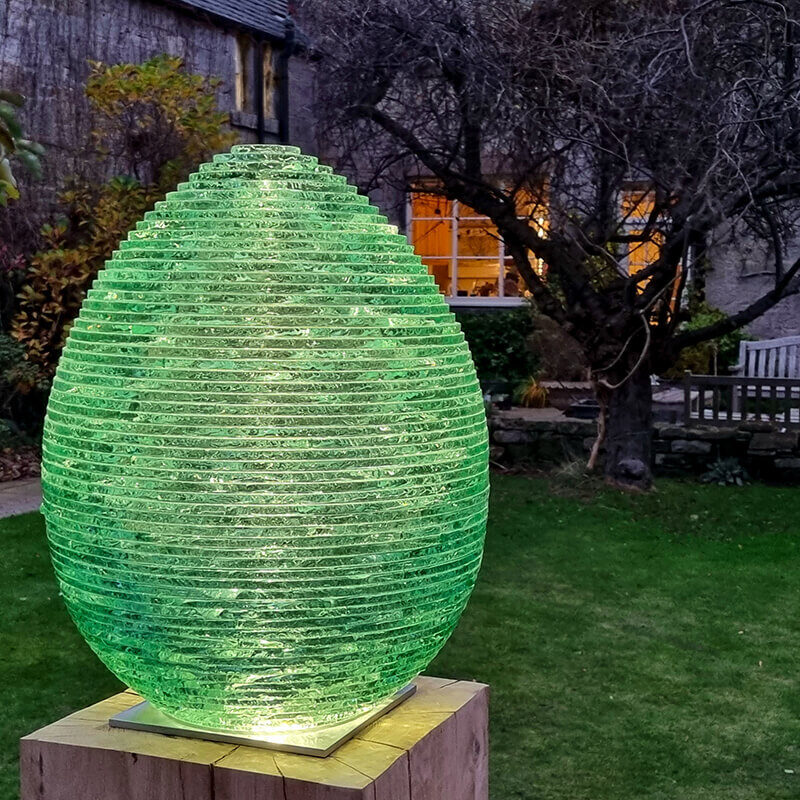
The sculpture itself remains constant: the light it responds to shifts continuously throughout the day. Light gathers at the edges and dissolves toward the centre.
In certain settings, discreet illumination extends its presence into evening, allowing the work to evolve beyond daylight.
Bronze
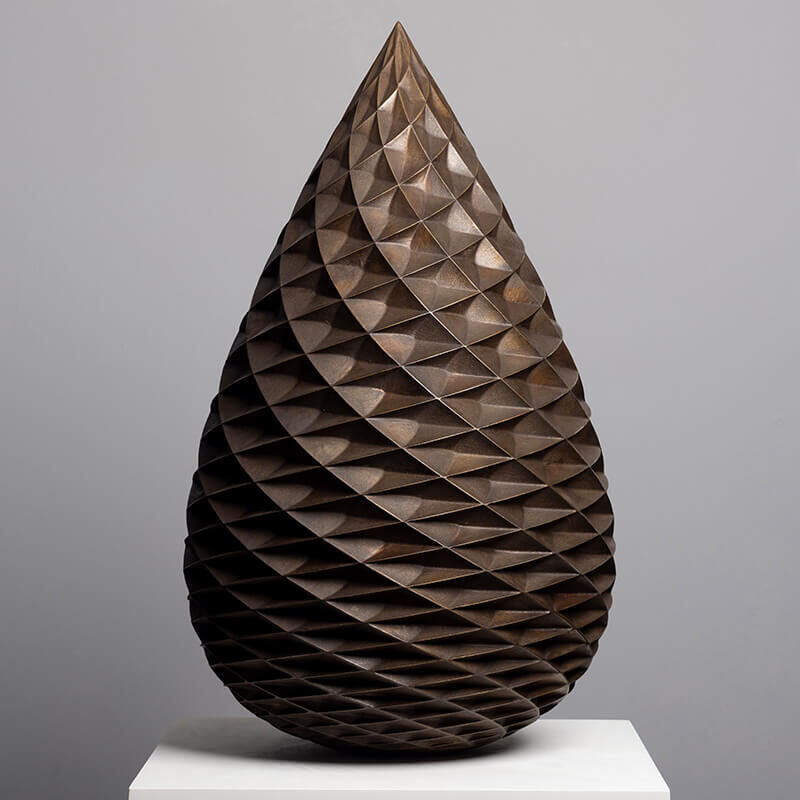
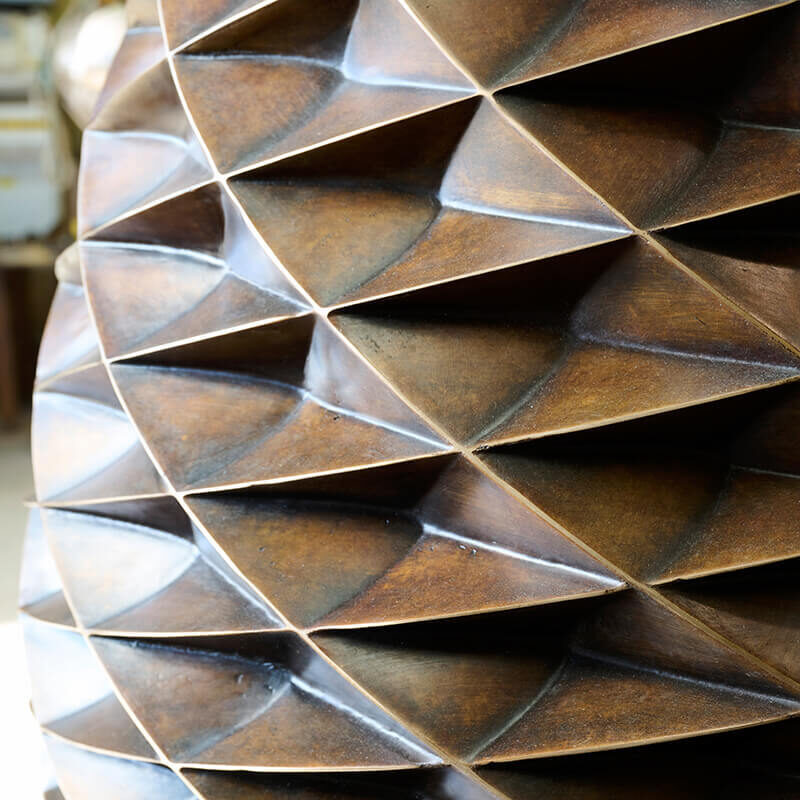
Bronze carries a quiet authority. A material that endures while retaining sensitivity of surface.
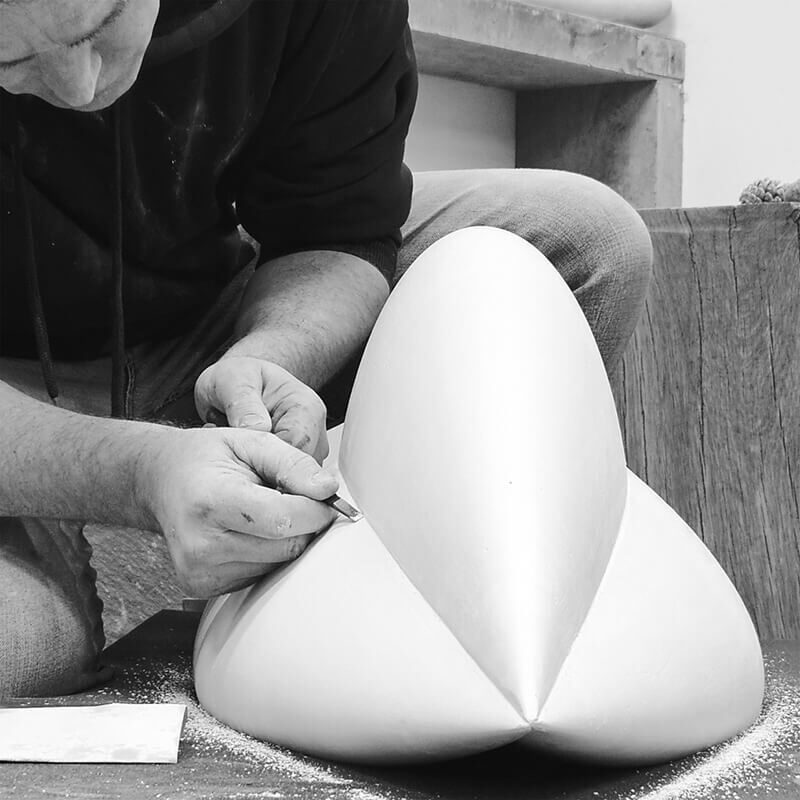
Original works are modelled in clay, plaster, wood and other media before being moulded and cast using lost-wax or sand-casting techniques.
Casting allows proportion and surface to be translated faithfully into metal while preserving the integrity of the original form.
Stainless Steel
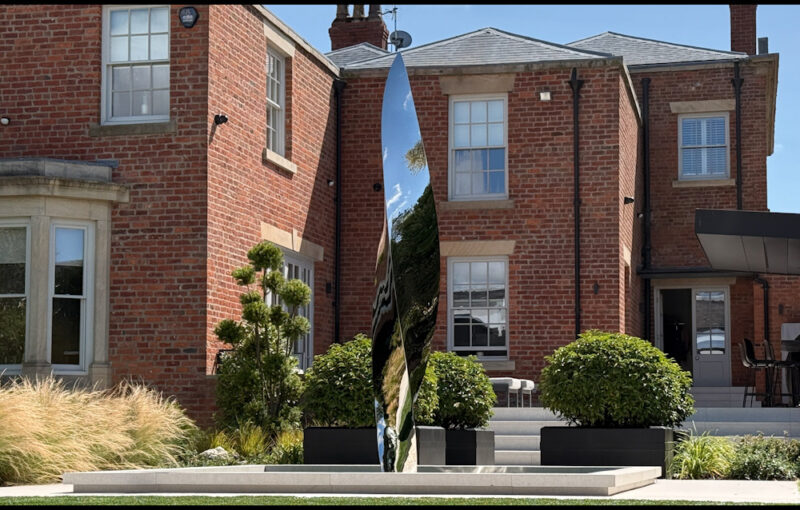
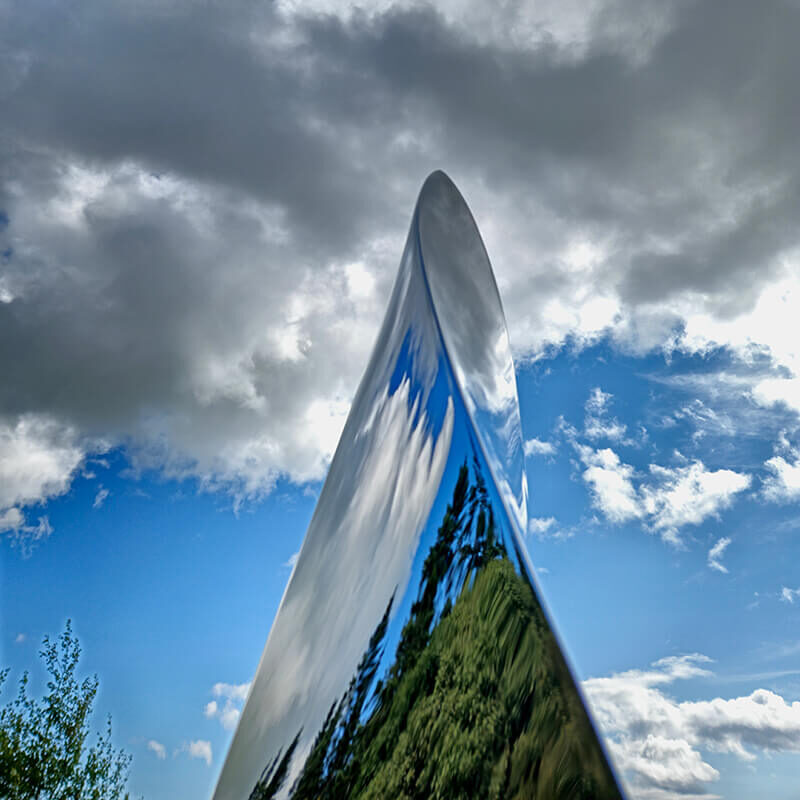
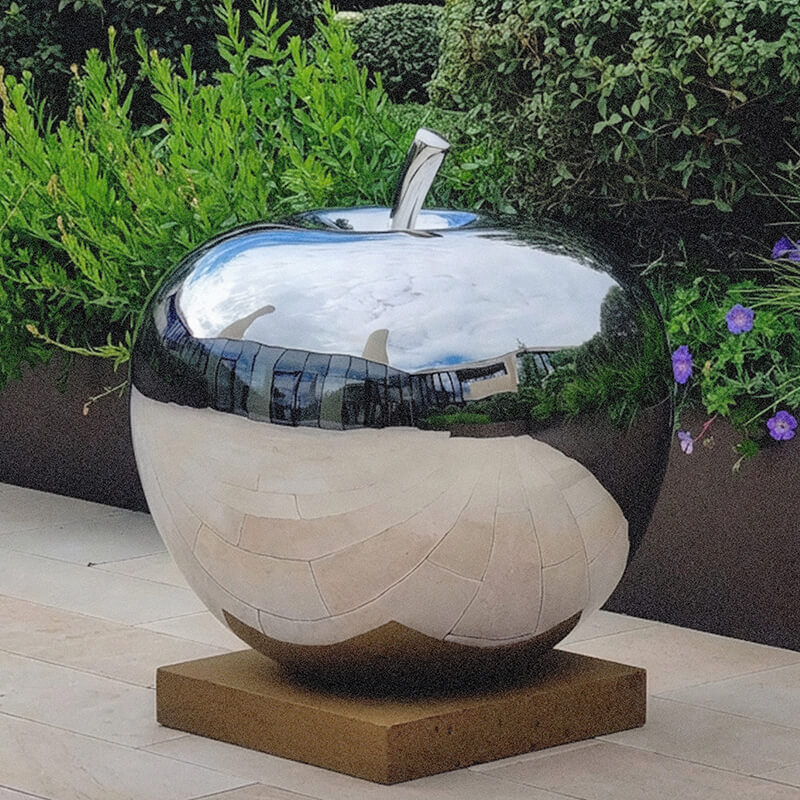
Mirror polished stainless steel introduces reflection.
Cold-forming processes allow for exceptional refinement and seamless curvature. The surface is hand-polished to achieve clarity and depth, enabling the sculpture to absorb its surroundings: drawing the eye beyond the surface of the form.
In landscape, stainless steel reflects the movement of clouds, the shifting of light, and the rhythm of planting. In interior settings, reflections become more intimate, drawing architecture and atmosphere into the piece. In both cases, the viewer’s own image is projected back at them, creating a subtle dialogue between observer and object, and reinforcing the sculpture’s relationship to its environment.
We would love to hear from you
Every sculpture begins with a conversation. If you are considering a piece and would like to discuss materials or setting, please get in touch.