Slate | Apple
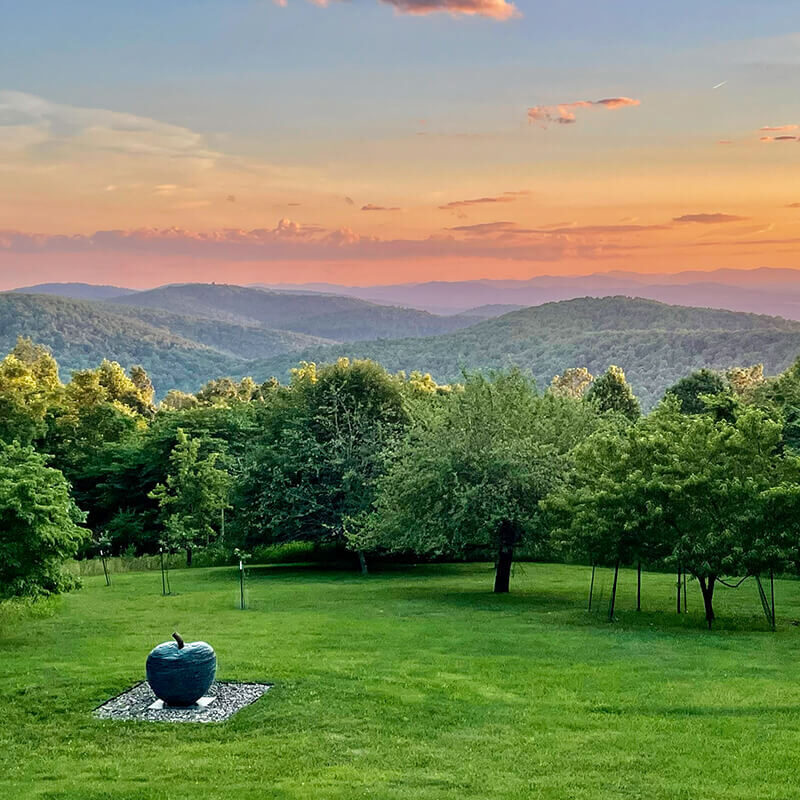
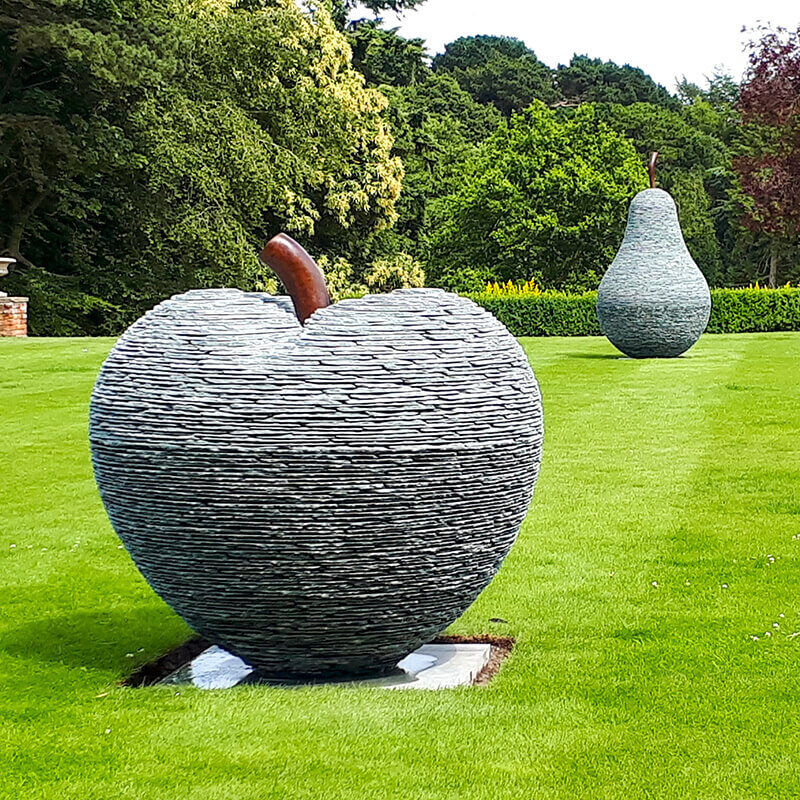
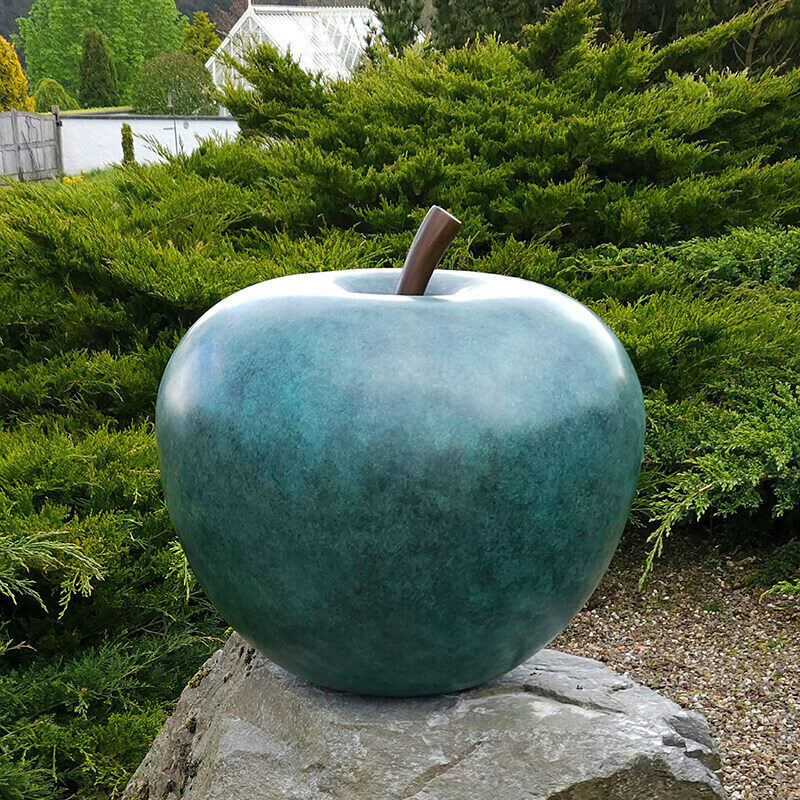
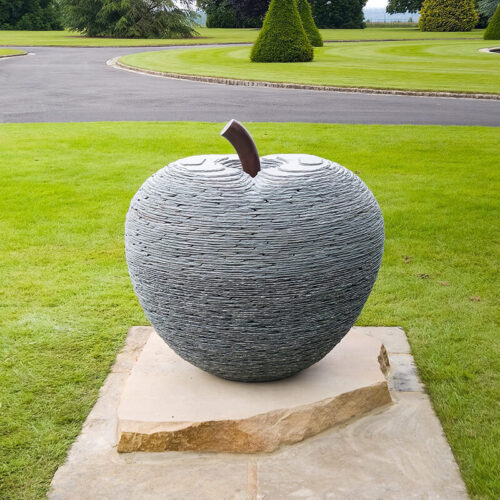
Apple has become one of my most sought-after sculptural forms. Its simplicity is deceptive. The apple is heart-shaped, familiar and immediately recognisable, yet it carries layers of meaning that resonate across cultures and generations.
MATERIAL: Slate with bronze stalk
SIZE OPTIONS: 55 cm, 75 cm, 93 cm, 100 cm, 110 cm, 120 cm, 130 cm, 140 cm and 150 cm in diameter
AVAILABILITY: Available to order
The apple has long been loaded with symbolism: from knowledge and discovery, famously associated with Isaac Newton, to temptation and the idea of the forbidden fruit. For me however, the connection is more grounded. Childhood memories of climbing apple trees and collecting fruit have stayed with me and I am always conscious of that sense of familiarity when shaping these works. I aim for a form that feels generous and resolved, with soft lines and gentle transitions.
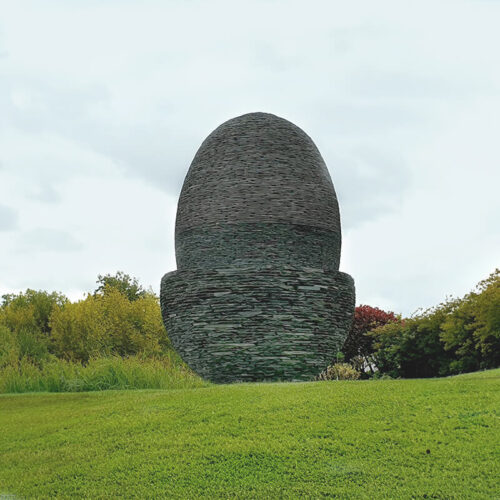
Each Apple is constructed by shaping individual pieces of slate and painstakingly stacking them together. The foundations of this technique were taught to me by my father when I was a child, dry stone walling in the south west of Scotland. Over the years, the process has evolved, allowing for greater fluidity and refinement, particularly as the sculptures increase in scale. Larger apples become more sinuous, their curves softened by the increased number of layers required to build the form.
The slate form is finished with a bronze stalk. Shaped from first principles, as with much of my work, the original stalk is carved from a piece of windblown timber before being cast in bronze using the lost-wax process. This detail provides a quiet contrast in material and colour, while grounding the sculpture in a sense of natural growth and balance.
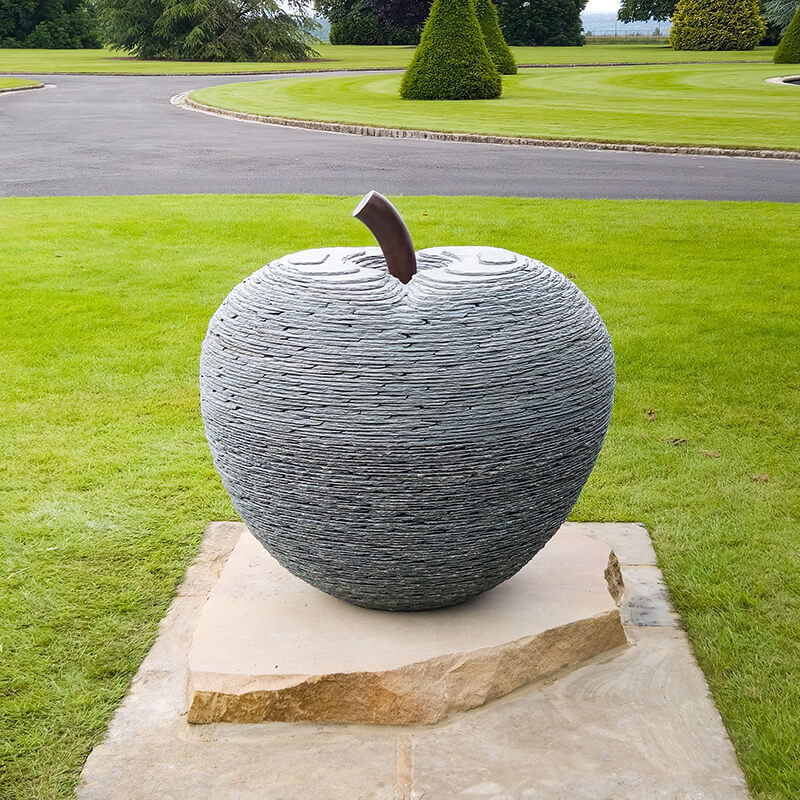
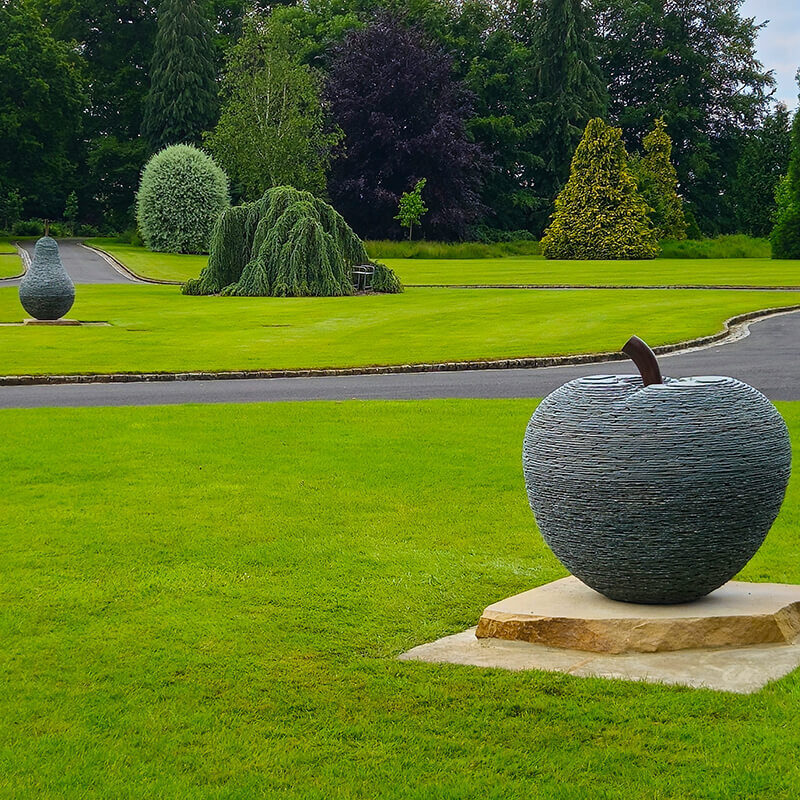
Once assembled, each sculpture is carefully rebuilt and secured so that it can be safely packed and transported to its new home. These works now sit in gardens and landscapes across the world — from private estates in the United States, including Virginia, to the south of France, the Algarve, Switzerland, and beyond. I feel very fortunate to see them placed within such considered settings.
The way Apple is encountered can vary greatly. Smaller pieces are often installed on plinths, raising them to eye level so the silhouette can be read clearly and the form appreciated in its entirety. Larger works tend to sit directly within the landscape as standalone sculptures, where a simple, low base allows the piece to feel grounded without distraction. In every case, placement is considered carefully, ensuring the sculpture feels settled and at ease.
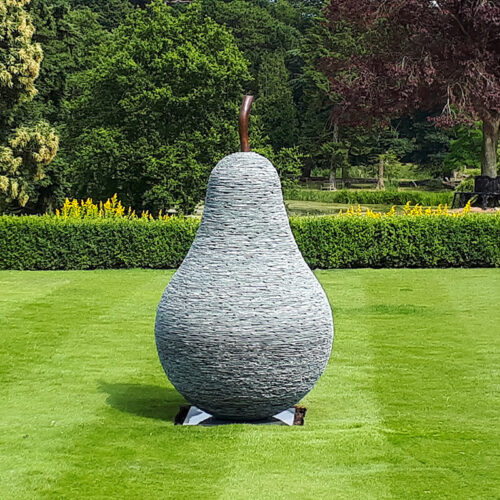
Seen within the landscape, the sculpture takes on different characters. In one setting, an Apple catches the last light of a Virginia sunset; in another, it is quietly inspected by a passing deer. Elsewhere, it sits in dialogue with a pear sculpture across the lawn of a grand country estate. These moments of context — light, wildlife, neighbouring forms — are as much a part of the work as the sculpture itself, revealing how each piece comes into its own once it finds its place.
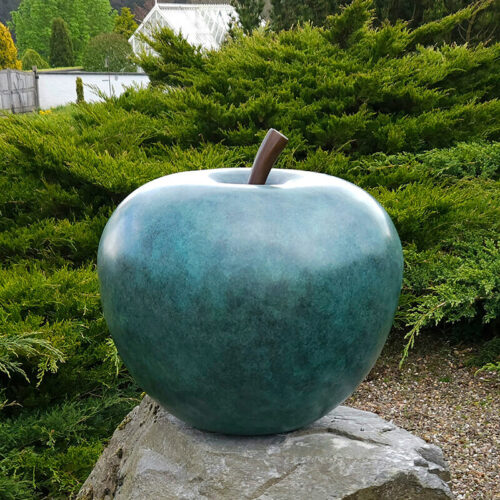
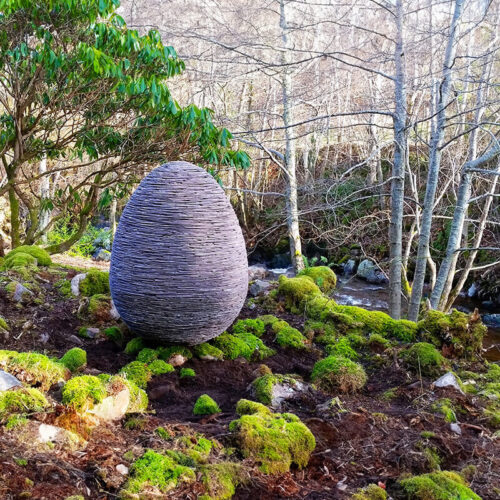
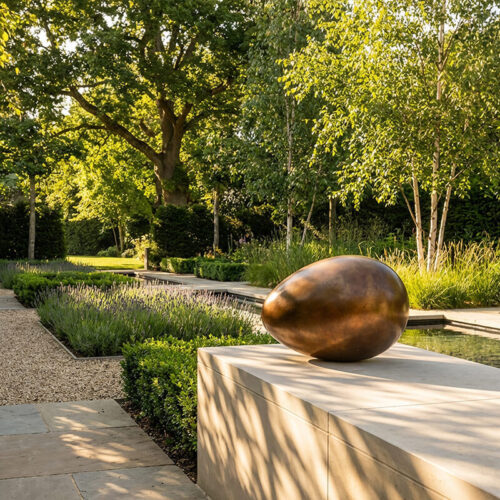
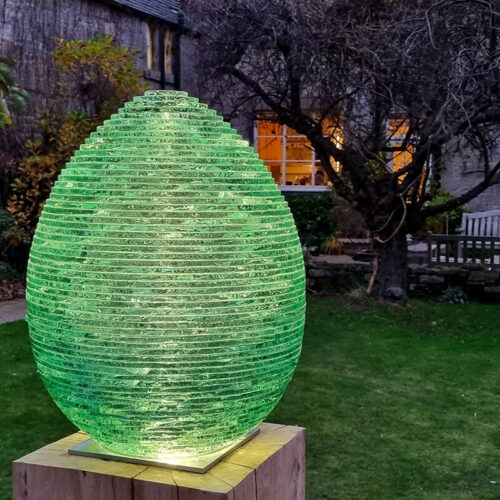
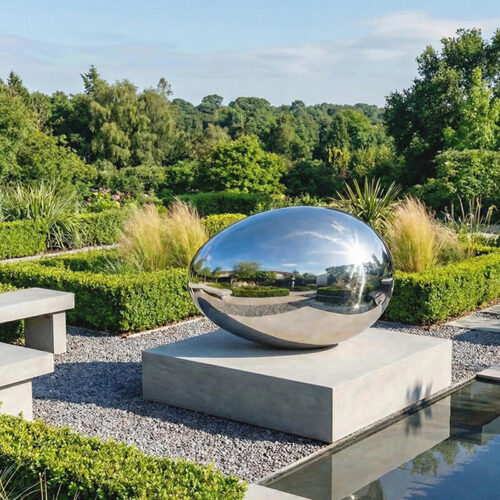
OTHER MATERIALS

We would love to hear from you
Every sculpture begins with a conversation. Whether you’re considering an existing work, or exploring a bespoke commission, get in touch to discuss possibilities and availability.