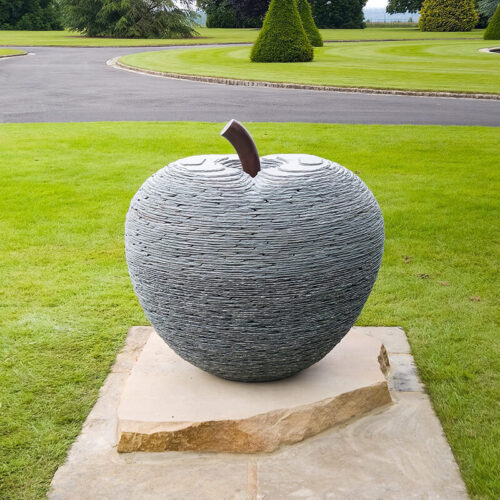
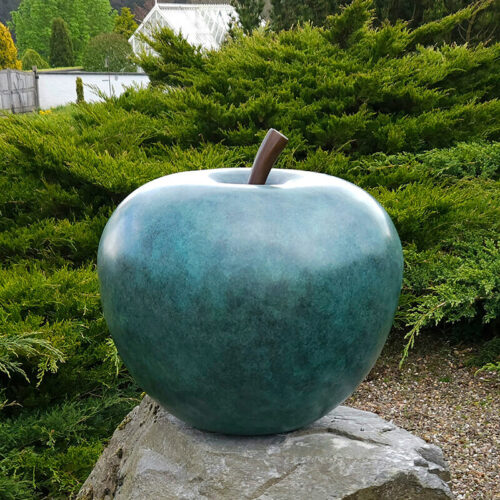

Apple
| |

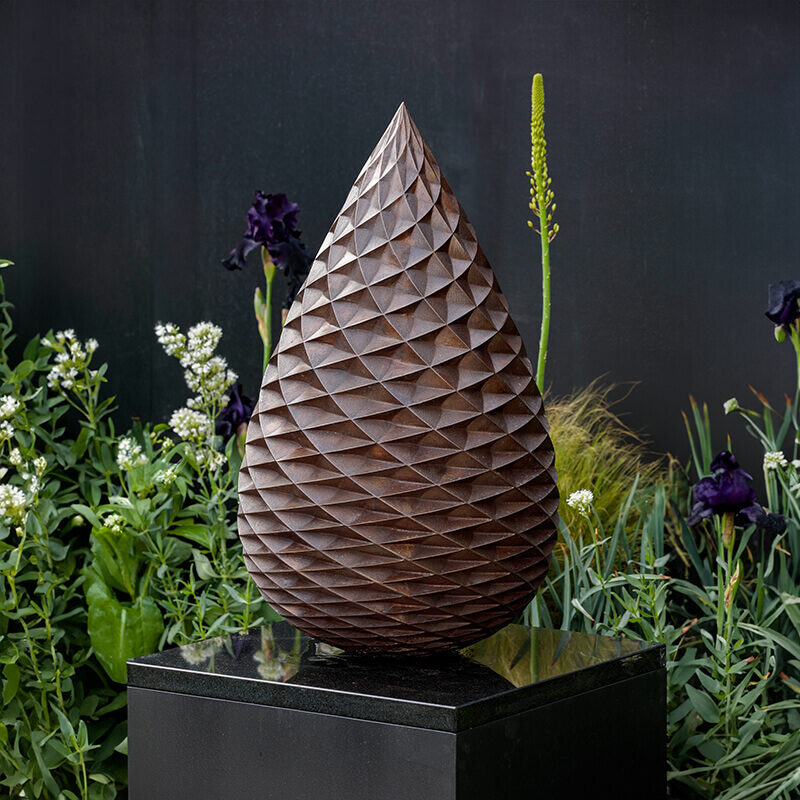
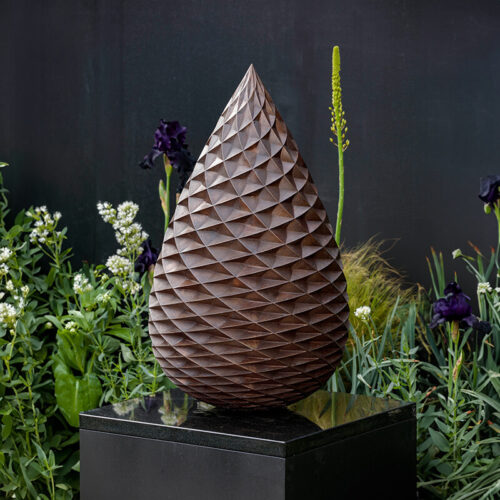
My fascination with the pine cone is rooted both in nature and in memory. Growing up on a farm on the west coast of Scotland, Scots pines towered above our home, swaying constantly in the prevailing wind. As children, my four siblings and I gathered the fallen cones from the woodland floor, blissfully unaware that these small, seemingly ordinary objects contained one of nature’s most refined structural solutions. That early, tactile familiarity stayed with me, and years later it resurfaced as both inspiration and challenge.
MATERIAL: Bronze with patination
SIZE OPTIONS:
12.6 cm in height - edition of 195 - available to order
30 cm in height - edition of 50 - available to order
50 cm in height - edition of 25 - available to order
80 cm in height - edition of 25 - available to order
130 cm in height - edition of 10 - available to order
210 cm in height - edition of 5 - available to order
420 cm in height - edition of 3 - available to order
Geometry in nature has always captivated me. It appears everywhere: in the arrangement of petals, the shells of molluscs, the spiralling arms of galaxies, even in the proportions of the human body explored by Leonardo da Vinci. The repeated emergence of Fibonacci sequences is no coincidence. Through millions of years of evolution, nature has arrived at irrational numbers as the most efficient way to maximise space, light, and survival, allowing seeds to be packed densely, leaves to avoid casting shadows and forms to grow with quiet inevitability.
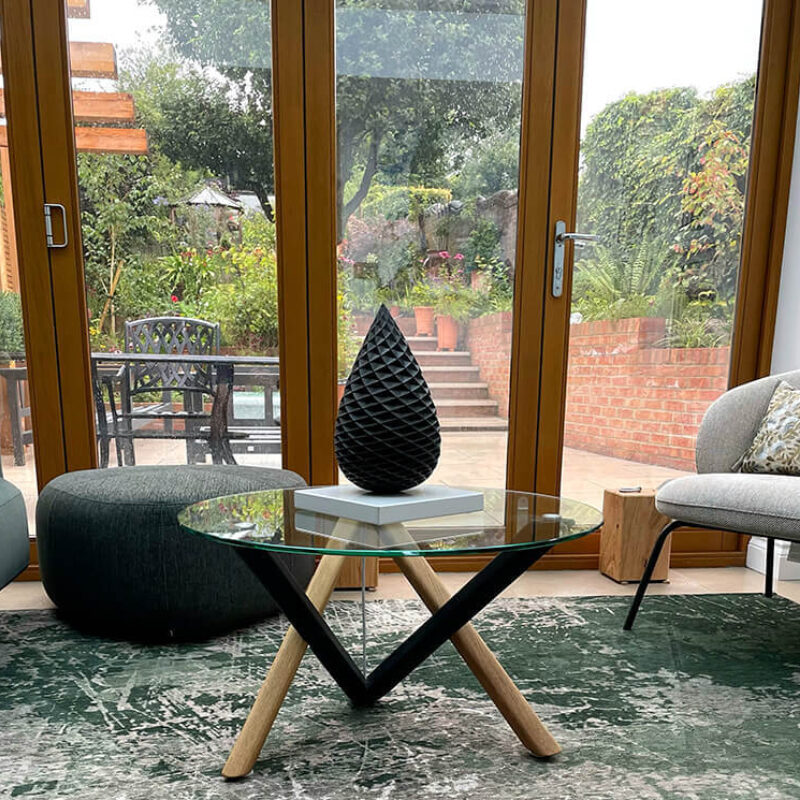
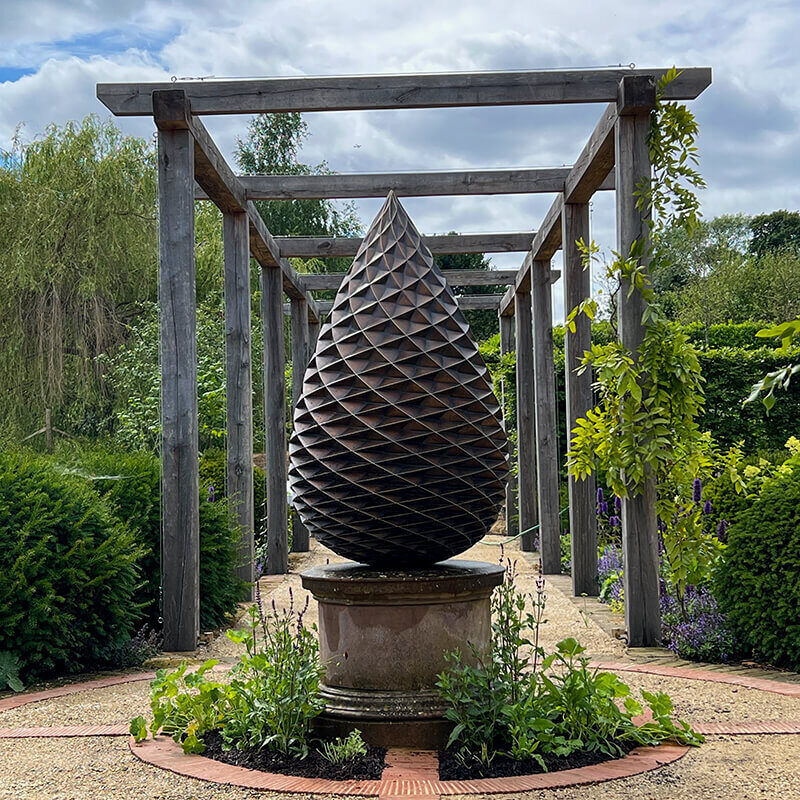
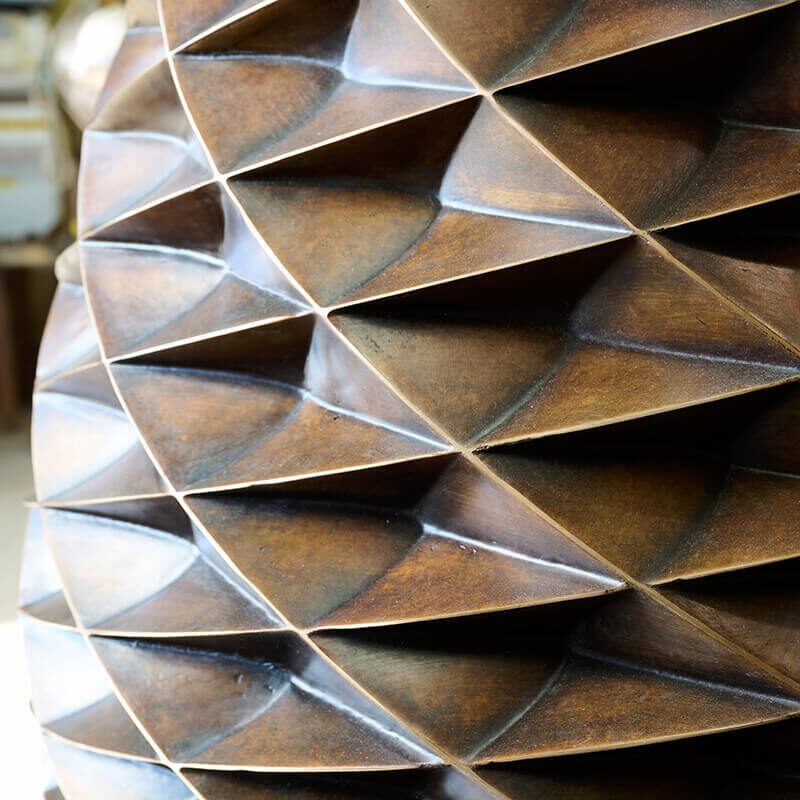
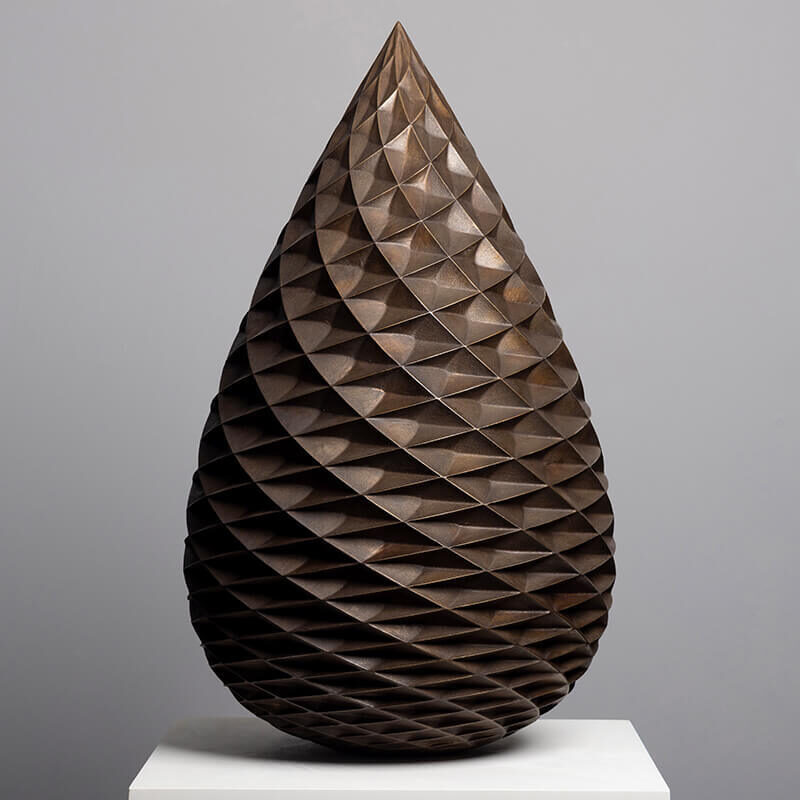
When I turned my attention to the pine cone, I knew abstraction would be key. My work is often about subtraction: distilling a form down to its essence while discarding the unnecessary. Look closely at a pine cone and you will find interlocking spirals running in both clockwise and counter-clockwise directions, almost always expressed as consecutive Fibonacci numbers. Smaller cones may reveal three spirals in one direction and five in the other, with eight scales just off the vertical; larger examples often resolve as five and eight, eight and thirteen, or thirteen and twenty-one. In Pine Cone, the sculpture resolves as eight spirals in one direction, thirteen in the other, with twenty-one scales just off the vertical. These spirals define the form and it was here that I devoted my attention.
The original sculpture was modelled before being moulded and cast using the lost-wax process. Later, the form was scaled up to 130 centimetres in height using sand casting techniques, allowing for exceptional precision at a larger scale. Pine Cone exists across a wide range of dimensions, from intimate editions small enough to sit in the palm of one’s hand, through to truly monumental works intended for expansive landscapes and architectural settings.
Whether encountered up close or at scale, the sculpture celebrates nature’s quiet intelligence. A form shaped by memory, mathematics and time.
Every sculpture begins with a conversation. Whether you’re considering an existing work, or exploring a bespoke commission, get in touch to discuss possibilities and availability.