From Idea to Structure

For bronze and stainless steel works, I typically develop an original at a manageable scale. Clay allows fluid adjustment with minimal resistance.

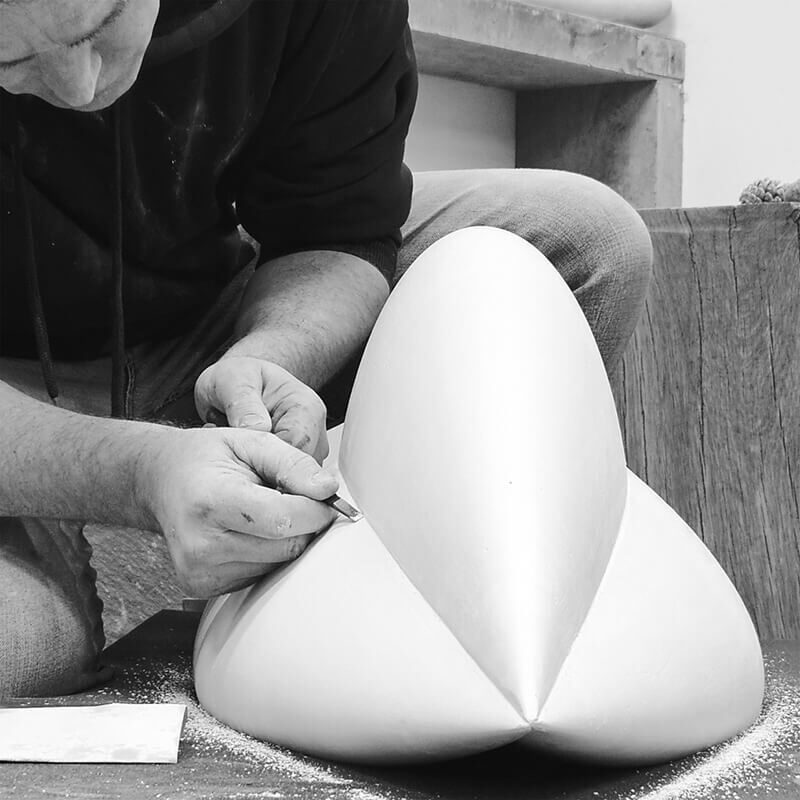
Once the form approaches where it needs to be, it is translated into plaster and refined further. Other modelling materials are occasionally used where appropriate: each serving only to carry the form forward.

Where larger or smaller editions are required, digital scaling methods are used when precision demands it. Proportion must remain intact at every dimension.


James Parker using a hand tool to refine the plaster pattern for the sculpture “Bud” in his workshop.
Close-up of pine cone scales forming a spiral pattern, used as a natural reference for sculpture.
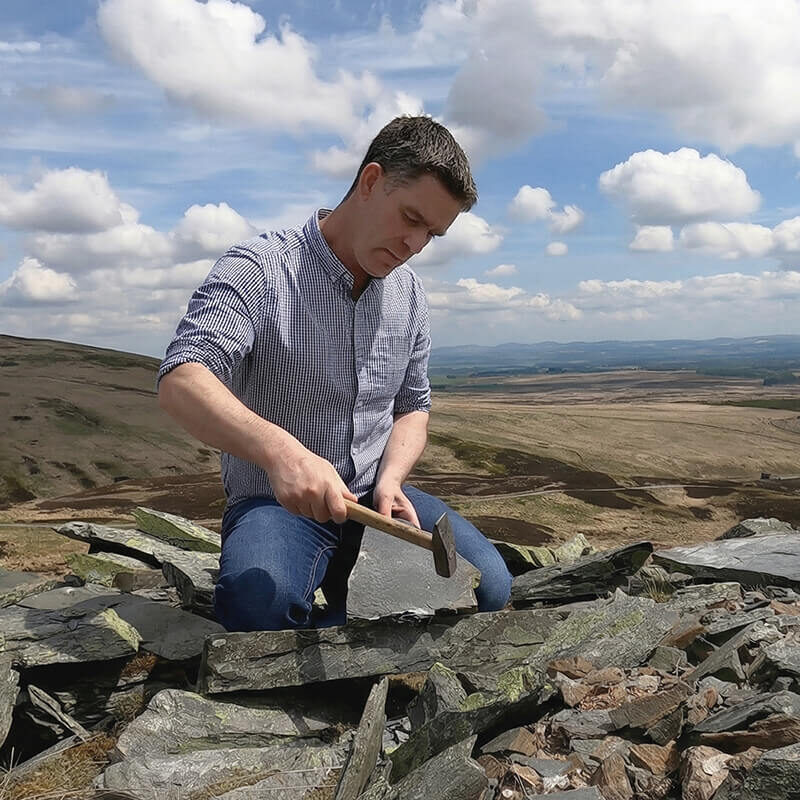
Hand placing a thin slate piece onto layered stone, building a stacked slate sculpture

Slate & Construction

Slate is constructed layer by layer. Each piece is shaped individually. The more layers introduced, the more fluid the curve becomes: almost like adding further points along a line.

Soft curves with gentle transitions are central to my work. Each line should feel as though it reaches its conclusion naturally or turns gently into another, meaning the eye doesn’t settle unnaturally. The form is continuous.

Glass & Light

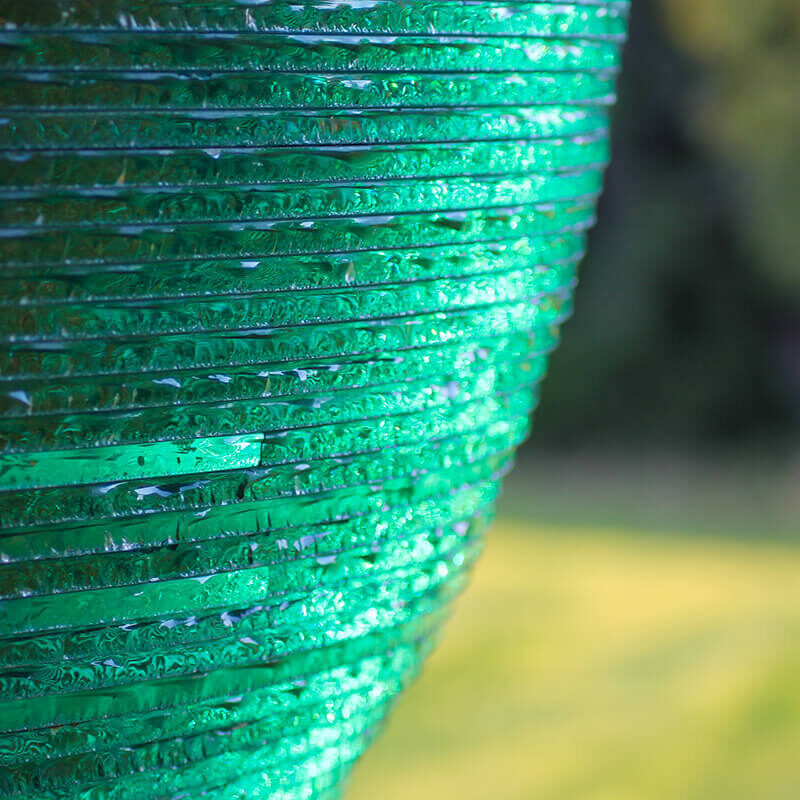
Glass introduces light as a structural element. A thinner section may carry a clearer teal hue: greater mass deepens the colour to that of a moody emerald. Internal structure matters as much as surface.

In works such as Light, the sculpture remains restrained for much of the day, revealing its full character only when conditions allow.


Close-up detail of layered stacked glass showing edge illumination and internal light diffusion.
Monumental sculpture “Light” by James Parker installed in front of a Highland house, demonstrating scale and placement in a landscape setting.
Shaped glass sections prepared for assembly, stacked and ready for construction in the studio process.
Close-up of a mirror-polished stainless steel apple sculpture by James Parker showing smooth curves and reflection.

Stainless Steel

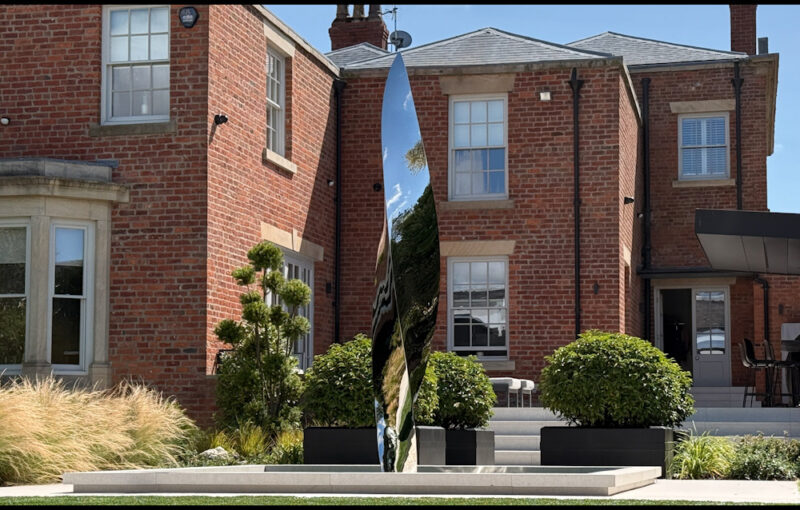
Mirror polished stainless steel introduces reflection and architectural clarity. Forms are cold-formed, welded and refined by hand. The surface must remain calm and uninterrupted.

Geometry & Abstraction

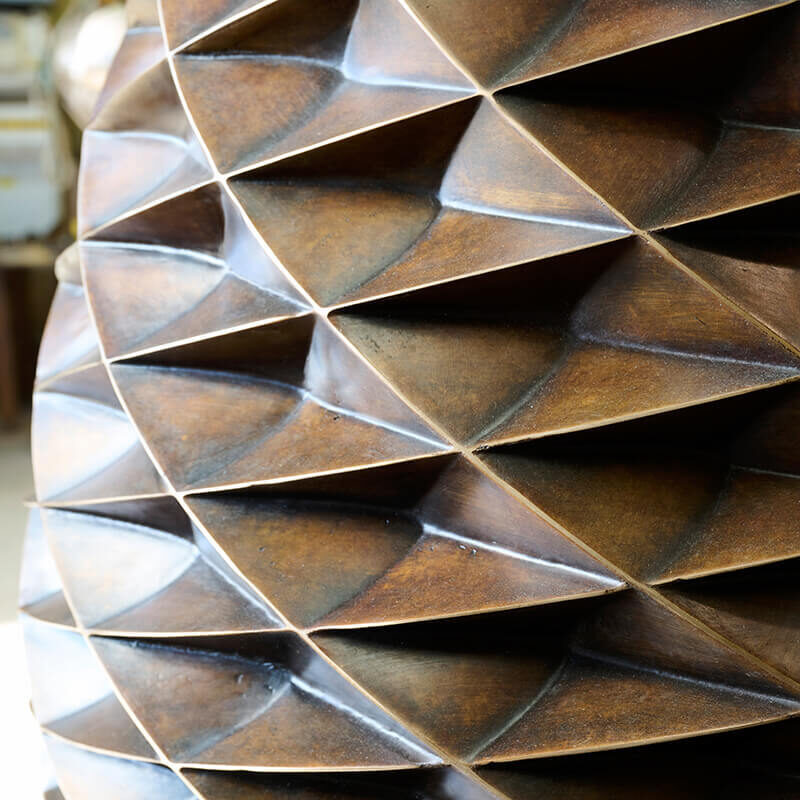
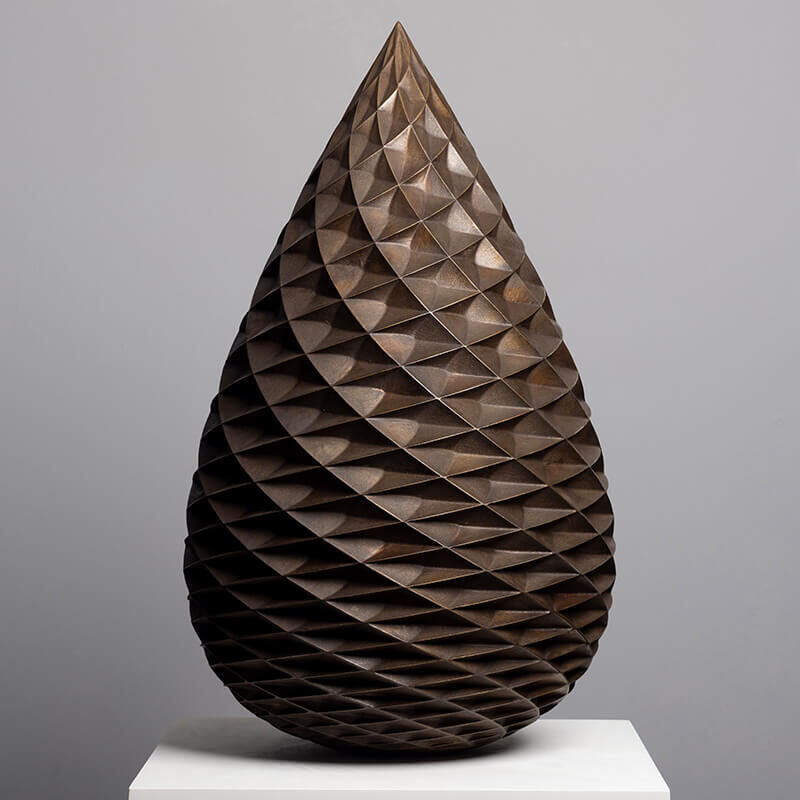
In Pine Cone, Fibonacci sequences govern interlocking spirals. Abstraction is achieved through subtraction - retaining only what defines the structure.


Close-up of geometric bronze surface showing precision casting and faceted modelling in a James Parker sculpture.
James parker bronze pine cone sculpture gallery

Scale & Presence

Scale changes experience. Monumental works introduce awe not only through size, but through clarity of construction. Different sites demand different responses.


James Parker kneeling beside a large bronze pine cone at a foundry, showing scale and craftsmanship.
Two monumental stacked slate torus sculptures titled “Spirit” installed outdoors in the south of France.

We would love to hear from you

Every sculpture begins with a conversation. Whether you’re considering an existing work, or exploring a bespoke commission, get in touch to discuss possibilities and availability.

You must enable javascript to view this website